5 AI Side Hustles That Actually Pay in 2026 (With Real Numbers)
Discover 5 AI-powered side hustles with real earning potential in 2026. From prompt engineering to AI video, here's what actually pays and what to skip.
You’ve seen the YouTube thumbnails promising five figures a month from AI tools, clicked a few, and come away with nothing but a vague sense that someone somewhere is definitely making money — just not you. The gap between “AI can do this” and “someone is paying me for this” is where most people stall.
This article is about closing that gap. These are five AI side hustles where the income mechanism is specific and the economics make sense for a solo operator spending $20–$60 per month on tools. No invented case studies, no suspiciously round numbers — just the real shape of each opportunity and what it actually takes to get paid.
1. AI-Assisted SEO Content Writing
What it is: You use AI tools (ChatGPT, Claude, Perplexity) to accelerate the drafting, research, and structuring of SEO articles for businesses, then apply human editing, factual verification, and strategic positioning before delivery.
Why it pays: Small businesses and content agencies have a near-infinite appetite for SEO content and a limited budget for senior writers. You’re the arbitrage layer — faster than a human-only writer, more reliable than raw AI output.
The economics: Rates for polished, niche-specific content on platforms like Upwork vary widely, but edited long-form articles for specialized industries (legal, SaaS, healthcare-adjacent) command meaningfully higher rates than generic content. A productive writer with solid AI-assisted workflows can realistically complete more articles per week than was possible manually, which is where the income scaling happens.
What makes it work: Picking a niche you understand. General “AI content writing” is a race to the bottom. “AI-assisted content for B2B SaaS product pages” is a service.
Tool cost: ChatGPT Plus and Claude Pro each run around $20/month. Many writers run on one or the other, not both.
The trap to avoid: Delivering raw AI output with light editing. Clients who’ve been burned by that are now sophisticated enough to spot it, and it kills referrals.
2. AI Prompt Engineering as a Productized Service
What it is: You develop, test, and sell purpose-built prompt systems — either as individual assets on marketplaces like PromptBase or as packaged consulting services for businesses integrating LLMs into their workflows.
Why it pays: Most business users of AI tools know the technology exists but don’t have the time to develop reliable, repeatable prompts for their specific workflows. A well-engineered prompt for, say, generating first drafts of client-facing financial reports is worth real money to a firm using it every week.
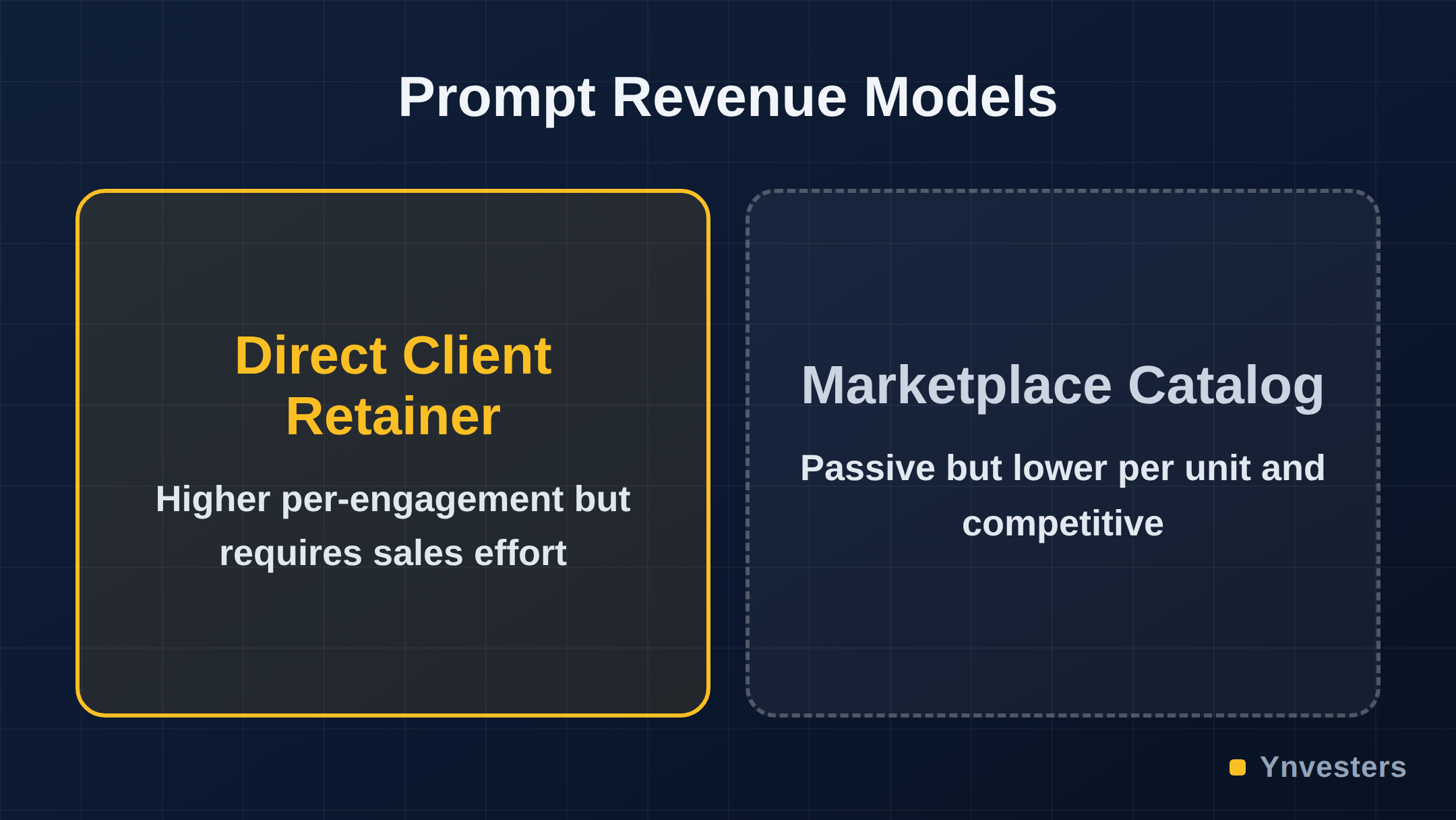
The economics: Marketplace sales of individual prompts are modest per unit, but a catalog approach — ten to twenty well-tested prompts targeting a specific professional vertical — can generate passive income. The higher-leverage play is selling prompt systems directly to businesses as a retainer: initial build plus ongoing refinement as the underlying models update.
What makes it work: Depth in a domain. Prompts for generic tasks are easy to replicate. Prompts that encode real professional knowledge — legal drafting conventions, clinical documentation standards, financial narrative structures — are harder to copy.
Tool cost: Varies by model access. OpenAI API costs scale with usage; for development and testing, a standard ChatGPT Plus subscription is usually sufficient to start.
3. AI Video Production for Small Businesses
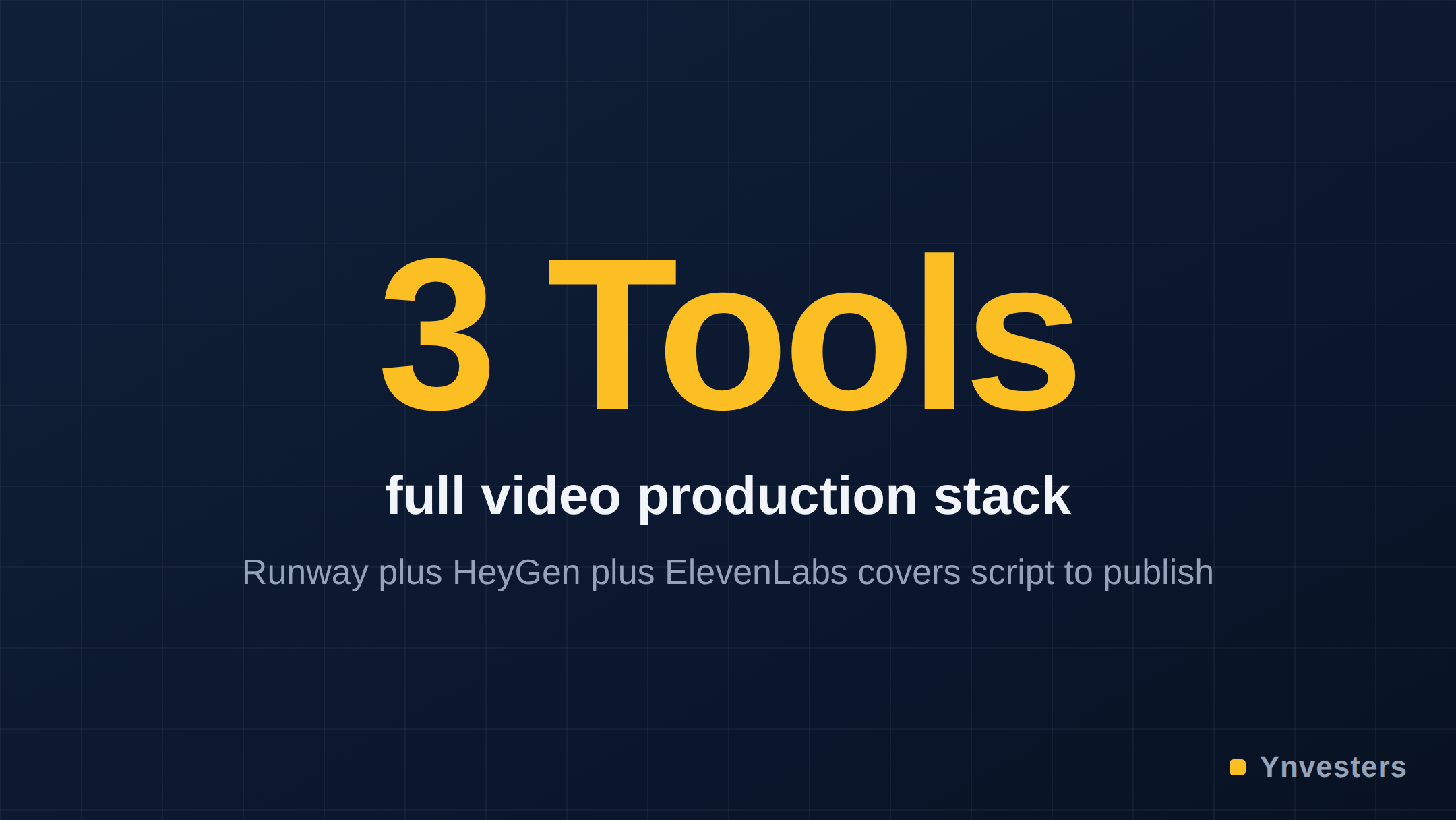
What it is: You produce short-form marketing videos, explainer content, or social media clips for small businesses using AI video tools — Runway, HeyGen for AI avatars, ElevenLabs for voice — then deliver packaged content on a retainer or project basis.
Why it pays: Video production has historically required equipment, a crew, or expensive freelancers. AI tools have compressed that dramatically. A small business that couldn’t justify a $3,000 video package might happily pay a few hundred dollars per month for a steady stream of short, polished video content.
The economics: The sweet spot is retainer pricing — a fixed monthly fee for a set number of deliverables. This is more predictable than project work and rewards the efficiency you build over time. Early clients often come from local business outreach or niched freelance platforms.
What makes it work: A defined package. “I make videos” is not a service. “I produce four 60-second social videos per month for restaurant owners, script included” is a service you can price and sell.
The trap to avoid: Over-investing in tools before landing a first client. Most of these platforms have free tiers or trial periods — validate the sale first.
4. AI-Powered Data Analysis and Reporting for SMBs
What it is: Small and medium businesses generate data they never look at — sales reports, customer survey results, Google Analytics exports, ad performance CSVs. You use AI tools (ChatGPT’s Advanced Data Analysis, Claude with document upload, or purpose-built tools) to turn that raw data into readable reports and actionable summaries, then deliver them on a monthly basis.
Why it pays: Hiring a full-time analyst is out of reach for most SMBs. A freelancer who can take a messy spreadsheet and return a clear one-page narrative with three recommendations is genuinely valuable — and AI makes that turnaround fast enough to handle multiple clients.
The economics: This is a premium-positioning play. You’re not selling “AI analysis” — you’re selling the insight and the time saved. Monthly reporting retainers for SMBs in specific verticals (e-commerce, local services, professional practices) are where the reliable income sits.
What makes it work: Understanding what business decisions the data is supposed to inform. AI can summarize numbers; you have to know which numbers matter to a dental practice versus a Shopify store.
Tool cost: ChatGPT Plus covers most use cases. For larger document sets, Claude Pro’s extended context window is worth evaluating — also around $20/month. Check Anthropic’s pricing page for current figures.
5. AI-Generated Digital Products (Templates, Assets, Mini-Tools)
What it is: You use AI to build and sell digital products — Notion templates with embedded AI prompt workflows, Midjourney prompt packs, GPT-based mini-tools built on the OpenAI API, or Canva template systems generated and refined with AI assistance — on platforms like Gumroad, Etsy (for digital), or your own site.
Why it pays: Digital products have zero marginal cost per sale. The income is genuinely passive after the build-and-marketing phase, and AI has dramatically reduced the build time for products that used to require hours of manual design or writing.
The economics: Individual product pricing varies enormously by category and platform. The economics only work at scale — either high price per unit (a sophisticated GPT workflow tool for a specific profession) or high volume at a lower price point. Most successful digital product sellers have a catalog, not a single product.
| Product Type | Build Time (Approx.) | Platform | Income Model |
|---|---|---|---|
| Midjourney prompt pack | Low | PromptBase, Gumroad | Per sale, passive |
| Notion AI workflow template | Medium | Gumroad, own site | Per sale, passive |
| GPT mini-tool (API-based) | High | Own site, AppSumo | Subscription or one-time |
| Canva template bundle | Low-Medium | Etsy, Creative Market | Per sale, passive |
The trap to avoid: Building in a vacuum. The digital products that sell are the ones solving a problem people are already searching for. Validate demand (search volume, Reddit threads, community asks) before you build.
Conclusion
The honest picture of AI side hustles in 2026 is this: the tools have never been more capable, and the market has never been more skeptical of low-effort AI output. Those two facts point to the same conclusion — the side hustles that actually pay are the ones where you’re contributing something the AI can’t: domain knowledge, editorial judgment, client relationships, or a productized process someone trusts.
Our take on who should pursue each:
- AI content writing is the right starting point if you have writing ability and want income fastest. Niche down immediately.
- Prompt engineering services suit people with deep expertise in a specific professional domain who want to package that knowledge.
- AI video production is the best bet for anyone with a visual eye and willingness to do consistent client work.
- Data analysis and reporting is right for anyone with a business or analytics background who wants premium positioning.
- Digital products suit builders with patience for the long game — the payoff is real but the ramp is slower.
If you’re starting from scratch with a $20–$30/month tool budget, pick one, build a repeatable process, and land two paying clients before you consider anything else. The AI handles the leverage; you provide the reason someone pays you instead of doing it themselves.
Frequently Asked Questions
Can you actually make money with AI side hustles in 2026?
Yes, but the income is tied to how much human skill you layer on top of the AI output. Pure automation plays are increasingly commoditized; niched services combining AI efficiency with domain expertise are where consistent income lives.
What is the best AI side hustle for beginners?
AI-assisted SEO content writing has the lowest barrier — you need a ChatGPT or Claude subscription, basic SEO knowledge, and a Upwork or direct outreach strategy. Rates for edited, niche-specific articles start from around $50 and scale with quality.
How much can you earn from selling AI prompts on PromptBase?
Individual prompt listings on PromptBase are priced by sellers, typically in a range that makes single sales modest, but a catalog of well-tested prompts for a specific professional use case can generate recurring passive income. Check PromptBase directly for current commission rates.
Do I need expensive AI tools to start an AI side hustle?
Not at the start. Most profitable AI side hustles run on subscriptions in the $20–$30 per month range — ChatGPT Plus, Claude Pro, or Midjourney Standard cover the majority of use cases. The real investment is time spent developing a repeatable process.