OpenAI Daybreak on AWS: What It Is, How It Compares, and Is It Worth It for Enterprise Security?
OpenAI's Daybreak cybersecurity models are now on AWS Bedrock. We compare them to rivals and tell you who should care and who should skip.
Your SOC team is drowning in alerts. Your analysts are copy-pasting threat reports into ChatGPT hoping for a coherent summary. And every vendor in your inbox is promising that their AI will finally make security operations manageable. If that sounds familiar, the announcement of OpenAI’s Daybreak models landing on AWS is worth paying attention to — not because it’s a magic fix, but because it represents a meaningful shift in how enterprise-grade AI security tooling is being distributed.
This guide breaks down what Daybreak actually is based on what’s been announced, how it stacks up against the real alternatives already in production, and whether it deserves a place in your security stack — or your budget approval request.
What Is OpenAI Daybreak?
According to the official announcement, OpenAI and AWS are making Daybreak cybersecurity capabilities available through Amazon Bedrock to support enterprise security workflows. That’s the core fact on the table right now.
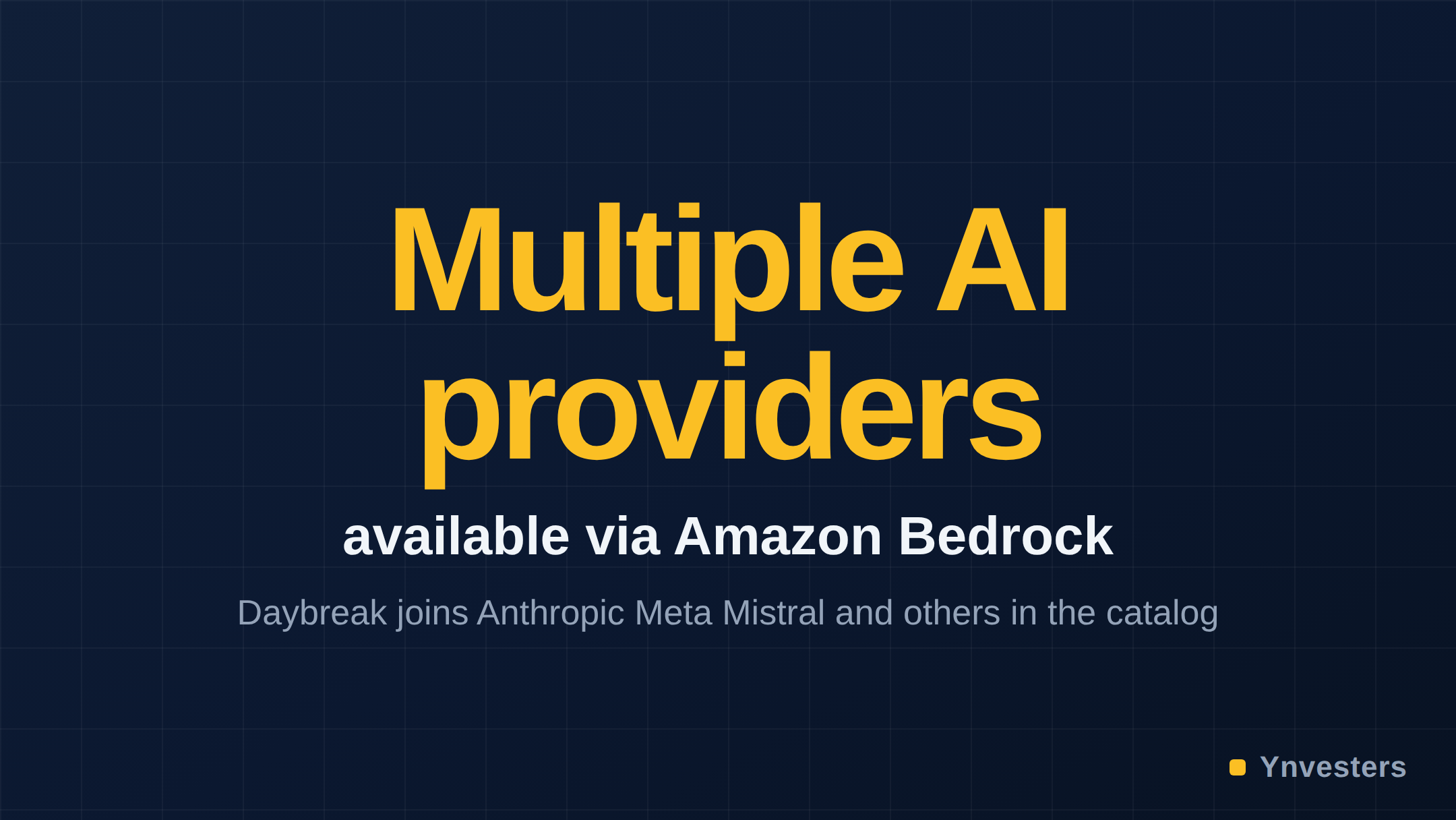
To translate: Amazon Bedrock is AWS’s fully managed service that lets developers access foundation models from multiple AI providers — including Anthropic, Meta, Mistral, and now OpenAI — through a single API without managing the underlying infrastructure. Placing Daybreak inside Bedrock means enterprise security teams can call these models within their existing AWS environment, apply standard AWS IAM permissions, and stay inside the compliance and data-residency boundaries they’ve already negotiated.
What we don’t yet have from the announcement: detailed model specs, benchmark performance data, specific use-case documentation, or pricing. Those details matter enormously for a purchasing decision, and we won’t speculate on them. If you’re evaluating this for procurement, the right move is to contact AWS enterprise sales or check the AWS Bedrock model catalog directly.
What the framing does tell us: this is not a general-purpose AI assistant. “Cybersecurity capabilities” and “enterprise security workflows” signal a narrow, professional use case — threat analysis, incident triage, security report generation, and similar work. This is not a tool for freelance content creators or solo developers looking for a coding assistant.
The Competitive Landscape: Who Daybreak Is Actually Up Against
Let’s be honest about the comparison set. Daybreak isn’t competing with ChatGPT Plus or Claude.ai subscriptions. It’s competing with other AI-native security platforms. Here’s how the field looks today.
Microsoft Security Copilot
Microsoft Security Copilot is the most direct reference point. It’s an AI security operations tool built on GPT-4 and Microsoft’s threat intelligence, deeply integrated with Microsoft Sentinel, Defender, and the broader Azure ecosystem. It was designed explicitly for SOC analysts, incident responders, and security administrators.
Security Copilot is consumption-based (priced in Security Compute Units — verify current SCU pricing on Microsoft’s site, as it changes). It’s enterprise-only and carries the full weight of Microsoft’s compliance certifications.
The key difference from Daybreak on Bedrock: if your organization runs on Azure and Microsoft 365, Security Copilot’s native integrations are a serious advantage. If your organization is AWS-first, it becomes a cross-cloud headache.
Google Cloud Security AI
Google has embedded AI capabilities into Chronicle (its SIEM product) and Mandiant, and has announced its own security-focused AI features through Google Cloud. Like Microsoft, Google’s security AI story is deeply tied to its own cloud ecosystem — strong if you’re Google Cloud-native, awkward if you’re not.
Amazon Bedrock’s Existing Security-Adjacent Models
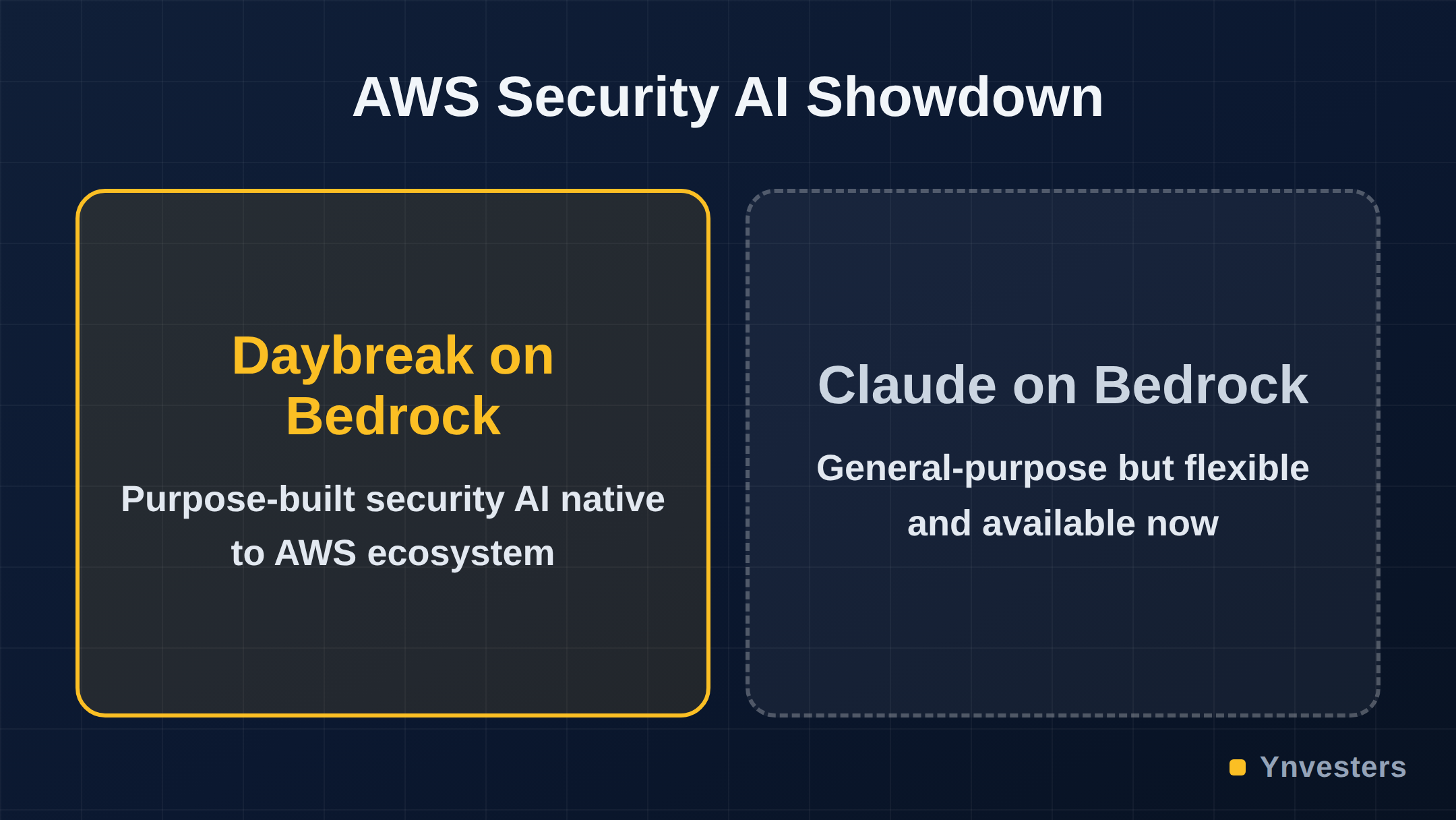
Before Daybreak arrived, Bedrock already hosted models that security teams were adapting for their workflows. Anthropic’s Claude, available on Bedrock, has been used for log analysis, threat narrative generation, and policy document summarization. The arrival of a purpose-built cybersecurity model from OpenAI changes the proposition: instead of prompting a general model to think like a security analyst, you get a model trained with security objectives in mind.
Standalone AI Security Startups
Companies like Vectra AI, Darktrace, and SentinelOne have been weaving AI into their detection and response platforms for years — often with proprietary models trained on threat data rather than general language model foundations. These tools are deeply integrated into endpoint and network telemetry in ways that a language-model-based tool, however capable, currently isn’t. They’re not the same product category as Daybreak, but they compete for the same security budget line items.
Comparison Table
| Tool | Cloud Home | Primary Use Case | Pricing Model | Best For |
|---|---|---|---|---|
| OpenAI Daybreak (AWS Bedrock) | AWS | Enterprise security workflows | Not yet announced — check AWS Bedrock | AWS-native security teams |
| Microsoft Security Copilot | Azure | SOC operations, incident response | Security Compute Units (consumption-based) | Microsoft/Azure-first orgs |
| Google Chronicle + AI | Google Cloud | SIEM-based threat detection | Contact Google Cloud sales | GCP-native security teams |
| Claude on Bedrock | AWS | General-purpose, adaptable to security | Standard Bedrock token pricing | Teams needing flexibility |
| Darktrace / Vectra AI | Cloud-agnostic | Autonomous threat detection | Subscription, varies by deployment | Orgs prioritizing autonomous detection |
What the AWS Bedrock Integration Actually Means in Practice
For enterprise teams, cloud-native distribution is not a minor detail. It’s frequently the deciding factor. Here’s what the Bedrock integration concretely means if it works as similar Bedrock integrations do:
Data stays in your AWS environment. One of the persistent objections to using external AI APIs for security workflows is data egress — you don’t want raw log data or incident details leaving your controlled environment. Bedrock’s model, in general, is designed so that your data isn’t used to train underlying models and stays within your AWS account boundary. You’d want to verify the specific data handling terms for Daybreak through AWS’s official documentation before deploying on sensitive data.
IAM and existing access controls apply. Your existing AWS Identity and Access Management policies can govern who can call the model and under what conditions — which is a significant compliance advantage over managing a separate set of API credentials.
Billing consolidates. For organizations already running substantial AWS workloads, adding Bedrock usage to an existing AWS bill (and potentially applying existing Enterprise Discount Program terms) is simpler than managing a separate vendor contract.
Integration with AWS security services becomes possible. AWS services like Amazon GuardDuty, AWS Security Hub, and CloudTrail generate substantial data. A security-focused AI model available on the same platform as these services creates a logical pipeline that would require considerably more engineering effort to replicate with an off-cloud API.
What We Don’t Know Yet (And Why That Matters)
Being direct about the gaps in available information is more useful to you than filling them with speculation:
- Specific model capabilities: The announcement describes “cybersecurity capabilities” without specifying what tasks the model handles — threat triage, malware analysis, natural-language query of security data, report generation, or something else. These distinctions matter enormously for evaluating fit.
- Benchmark performance: No independent or vendor-provided benchmarks against security-specific evaluations (like CyberSecEval or similar frameworks) have been shared.
- Pricing: This is the biggest gap for anyone building a business case. Bedrock pricing for other models is generally token-based, but enterprise agreements can shift that significantly. Do not put a number in a budget proposal until you have a quote from AWS.
- Availability timeline and regions: The announcement does not specify which AWS regions Daybreak is available in today, which matters for data-residency compliance in regulated industries.
None of this means Daybreak isn’t worth attention. It means the announcement is the start of the evaluation process, not the end.
Who Should Pay Attention Right Now
You should be actively evaluating Daybreak on AWS if:
- Your organization is already AWS-native and your security tooling sits inside the AWS ecosystem
- You’re a security engineering or platform team looking to build custom security workflows on top of a foundation model, not buy a packaged SaaS product
- You have existing AWS Enterprise agreements and want to consolidate AI vendor relationships
- Your compliance posture requires data to stay within AWS’s infrastructure
You should wait or look elsewhere if:
- Your stack is Azure or GCP — the integration benefits disappear and you’re left with a cross-cloud complexity problem
- You need a ready-built SOC copilot with a UI your analysts can use today without custom development — Security Copilot is further along on that front
- You’re a solo practitioner or small team. This product category does not exist to serve you, and pricing (once revealed) will almost certainly reflect that
- You need detailed benchmark evidence before any internal approval process — that evidence isn’t available yet
Conclusion
Our take: the OpenAI Daybreak announcement on AWS is genuinely significant for enterprise security teams, not as marketing noise, but as a structural shift in how capable AI is being embedded into the infrastructure layer where security work already happens. A purpose-built cybersecurity model available natively inside Amazon Bedrock — with all the IAM, compliance, and billing integration that implies — addresses real friction points that security teams have faced when trying to adapt general-purpose AI to sensitive workflows.
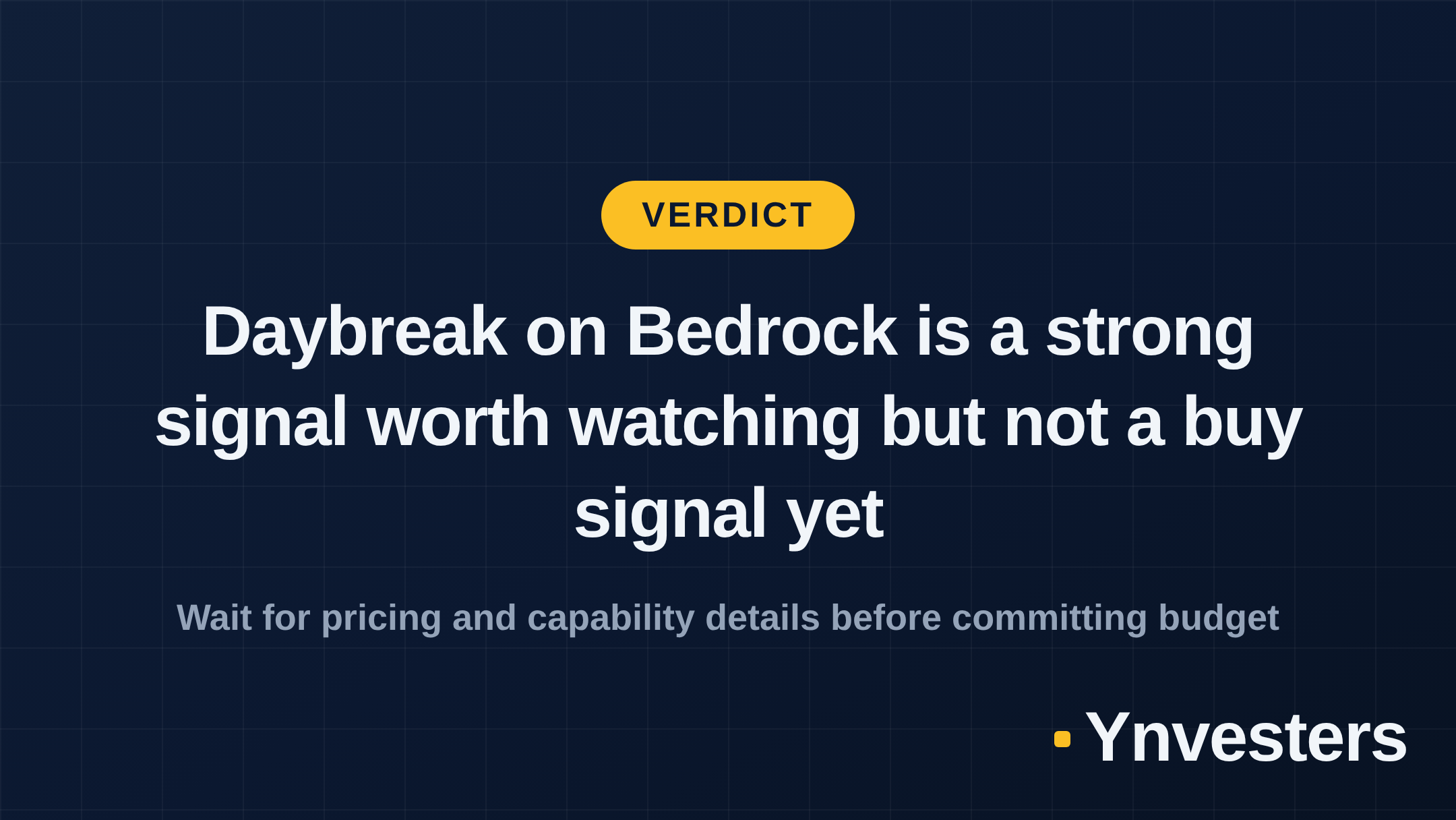
But “significant” and “worth your budget” are different questions, and right now the information needed to answer the second one hasn’t been made public. Pricing is unknown. Specific capability details are thin. Independent benchmarks don’t exist yet.
Our recommendation: If you’re an AWS-native enterprise security team, put Daybreak on your active evaluation list, request early access or pricing from AWS, and watch for technical documentation in the coming weeks. If you’re on Azure, Microsoft Security Copilot deserves your attention first. If you’re a solo creator or freelancer who landed here wondering if this replaces your Claude subscription — it doesn’t, and it was never meant to.
The AI security tooling market is moving fast, and Daybreak’s arrival on Bedrock confirms that the big infrastructure layer of this competition runs through cloud providers, not app stores. That’s the trend worth tracking, regardless of which specific model wins the benchmark race.
Frequently Asked Questions
What is OpenAI Daybreak?
Daybreak is OpenAI's cybersecurity-focused AI capability, designed to support enterprise security workflows. It is now available through Amazon Bedrock, AWS's managed AI platform.
How much does Daybreak on AWS cost?
Pricing has not been publicly announced at the time of writing. Check the AWS Bedrock pricing page and OpenAI's enterprise contact page for current figures.
Who is Daybreak on AWS actually for?
It is built for enterprise security teams that already operate within the AWS ecosystem. Solo users, small teams, and non-security professionals are not the target audience.
How does Daybreak compare to Microsoft Security Copilot?
Both target enterprise security operations, but Daybreak integrates with AWS Bedrock while Microsoft Security Copilot is tightly tied to the Microsoft Azure and Sentinel ecosystem. Which fits you depends on your existing cloud stack.