ElevenLabs vs Murf AI: The Only Voice AI Comparison with a Straight Answer (2026)
ElevenLabs vs Murf AI compared on voice quality, pricing, and features. Find out which voice AI tool is worth your subscription in 2026.
You record a voiceover, hate the sound of your own voice, and decide to let AI handle it. Twenty minutes of Googling later you are stuck between two tabs — ElevenLabs and Murf AI — both promising broadcast-quality audio, both with pricing pages that look similar enough to be confusing. Which one do you actually pay for?
This comparison cuts through the marketing. We looked at what each tool actually does, where each one breaks down, and which type of creator gets real value from each subscription. No vague “it depends.” A straight answer at the end.
What Each Tool Is Actually Trying to Be
Before comparing features, it helps to understand the different bets these two companies made.
ElevenLabs is fundamentally a voice AI research company that sells access to its models. Its north star is voice realism — the closest thing to a human narrator you can generate from text. The product is built around a powerful API, voice cloning, and a growing library of multilingual voices. Developers love it. Podcasters love it. Audiobook publishers use it commercially.
Murf AI took a different path. It is a studio-in-a-browser product aimed at non-technical creators who need professional voiceovers fast. The interface is closer to a video editing timeline than a developer console. Slide sync, script editing, background music layering — it is designed for the corporate communicator, the L&D professional, and the marketing team that does not have a sound engineer on staff.
That difference in product philosophy explains almost every feature gap below.
Feature-by-Feature Breakdown
1. Voice Quality and Realism
This is where the gap is most obvious and most consequential.
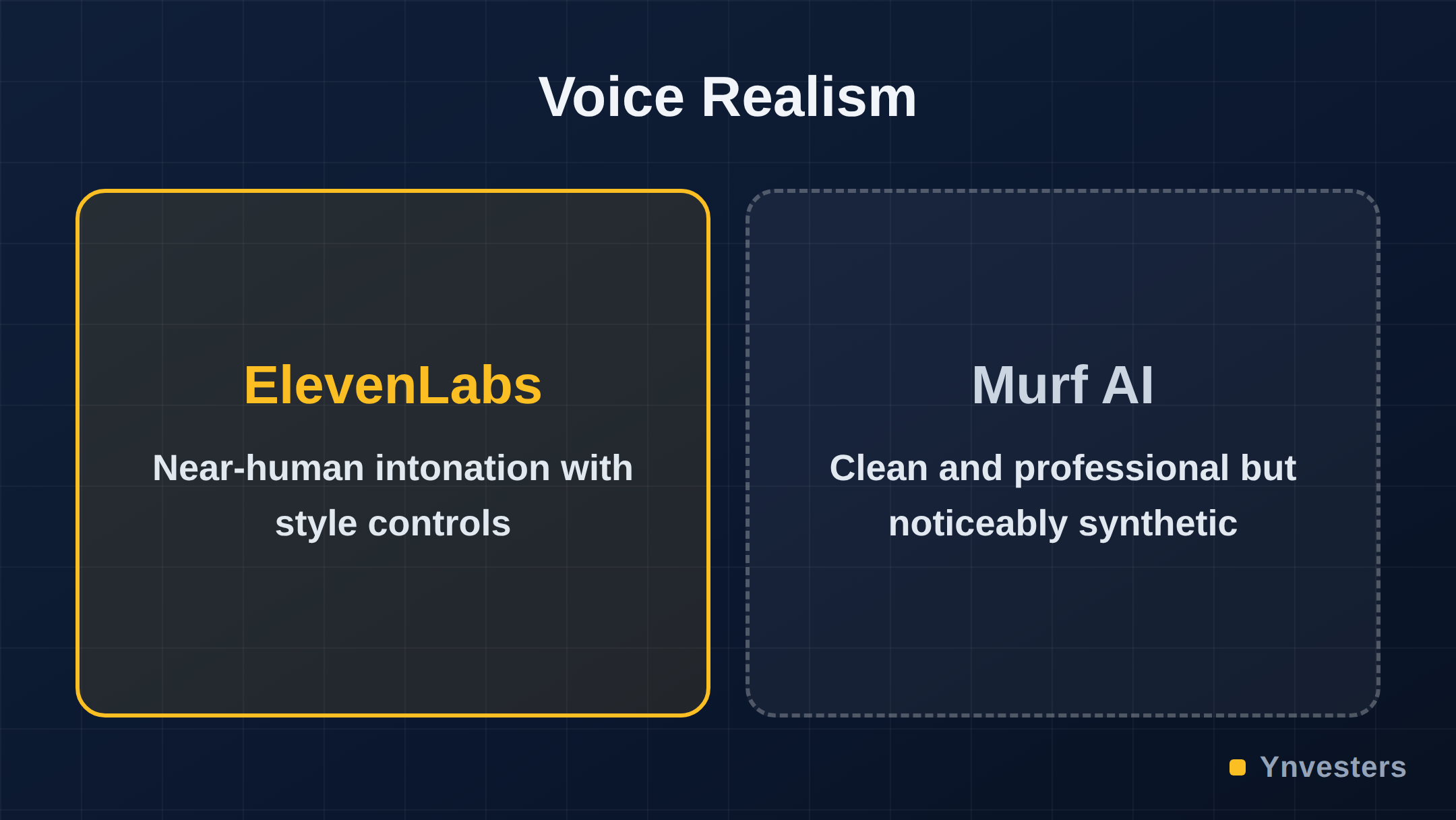
ElevenLabs’ voices — especially on its higher-tier models — are widely regarded as among the most realistic AI voices available today. Intonation shifts naturally mid-sentence. Pauses feel earned. Emotional range (whispering, excitement, gravitas) is controllable through its “Voice Settings” sliders for stability, similarity, and style exaggeration. The result is audio that regularly passes informal listening tests.
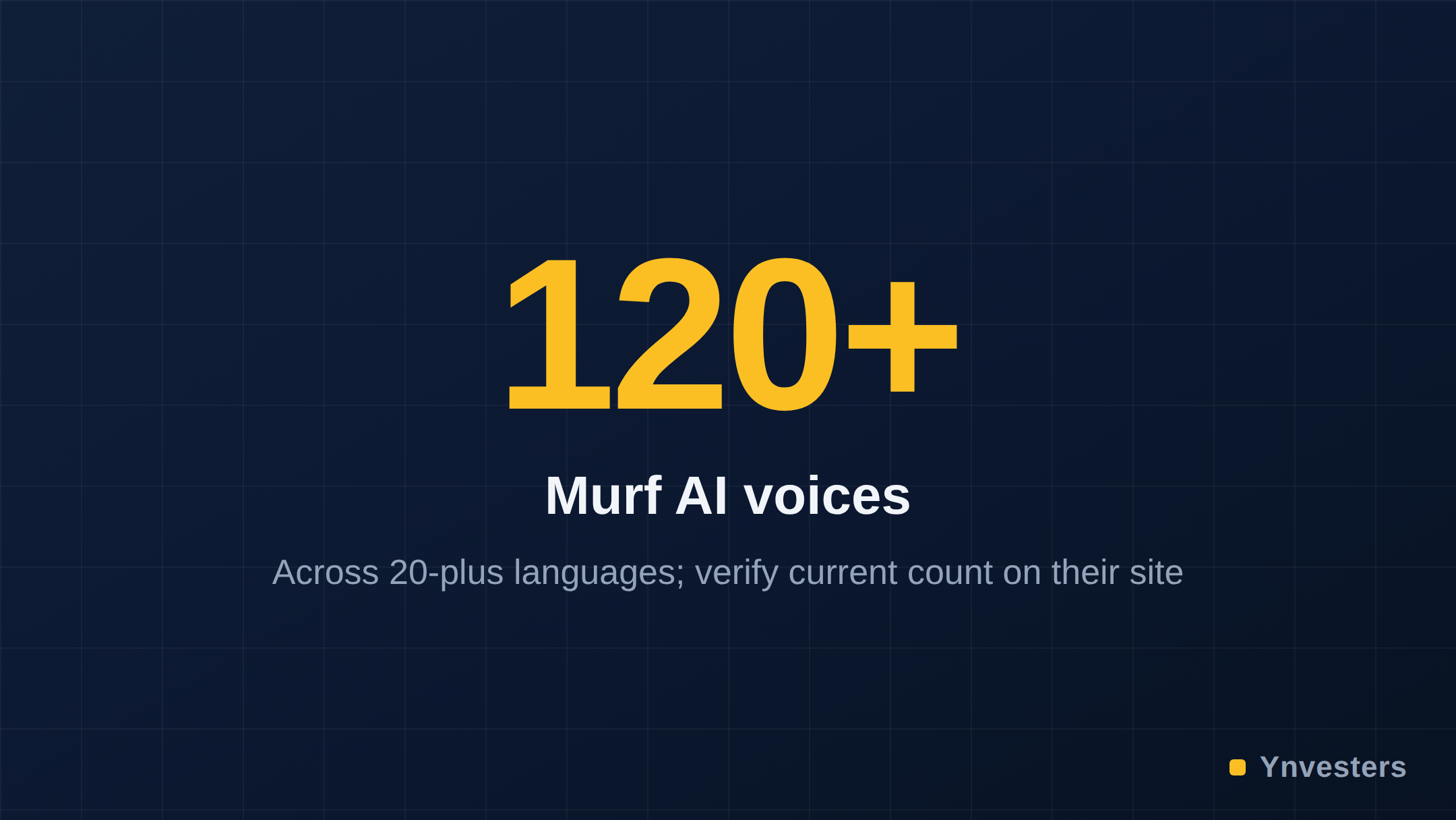
Murf’s voice library is large — the company lists over 120 voices across more than 20 languages (verify current counts on their site). The quality is good and entirely usable for corporate narration, e-learning modules, and explainer videos. But in a side-by-side listen, Murf voices tend to carry more of the characteristic AI “flatness” that ElevenLabs has largely eliminated in its flagship models.
Winner: ElevenLabs — not close on raw realism.
2. Voice Cloning
ElevenLabs offers voice cloning on paid plans. Instant Voice Cloning lets you upload a short audio sample and generate a cloned voice in minutes. Professional Voice Cloning — available on higher tiers — produces a more accurate, stable clone from longer samples. This is genuinely useful for creators who want audio content that sounds consistently like them without recording every word.
Murf also offers voice cloning, but it is positioned more as a way to match a brand’s existing narration style than as a first-class creator feature. The workflow is less prominent in the UI, and the output fidelity is generally considered a step below ElevenLabs’ cloned voices — though you should test both with your own voice samples before deciding.
Winner: ElevenLabs — deeper cloning options and clearer output quality.
3. Studio Workflow and Script Editor
This is where Murf earns its keep.
Murf’s interface includes a full script editor where you can type or paste narration, assign different voices to different paragraphs, adjust pacing inline, and preview the full audio before rendering. You can sync narration directly to presentation slides. You can layer in background music from their built-in library. Team members can collaborate inside the same project.
For anyone producing a training video, a product demo, or a corporate explainer, Murf saves real time because the whole production loop lives in one place. You do not need to export audio, drop it into a video editor, re-sync it, re-export — the cycle that eats afternoons.
ElevenLabs has a Projects feature that handles long-form content and multi-voice narration, and it has improved significantly. But the interface is built around audio generation first, video production second. It is not a Murf replacement for teams running a weekly video production workflow.
Winner: Murf AI — the studio workflow is its core differentiator.
4. API and Developer Access
ElevenLabs has a well-documented, actively maintained API. Developers building voice into applications — customer service bots, interactive fiction, accessibility tools, content automation pipelines — use ElevenLabs as infrastructure. The API supports streaming audio, which matters for real-time applications. The ElevenLabs API documentation is detailed and includes client libraries for multiple languages.
Murf offers an API, but it is more limited in scope and clearly not the company’s primary product focus. If you are building something programmatic, ElevenLabs is the default choice.
Winner: ElevenLabs — no comparison for developer use cases.
5. Language and Multilingual Support
Both tools support a meaningful number of languages, and both are expanding their multilingual catalogs. ElevenLabs has invested heavily in multilingual models that maintain voice character across languages — so a cloned English voice can generate credible Spanish or French output using the same underlying voice profile.
Murf’s multilingual offering is strong for the languages it covers, and for corporate teams localizing training content into a fixed set of target languages, it is more than sufficient.
Winner: Roughly even — verify specific language support for your target languages on each platform’s current voice library page, as both catalogs change frequently.
6. Pricing Structure
Neither company makes pricing simple to compare, and both adjust their plans over time, so treat the following as structural observations rather than exact figures.
ElevenLabs uses a character-based credit model — you pay for the volume of text you convert to speech. Free tier users get a limited monthly character allowance. Paid plans scale up the allowance and unlock features like voice cloning and commercial usage rights. Check the ElevenLabs pricing page for current tiers.
Murf prices on a minutes-of-audio output model combined with team seat counts. Individual plans are available, but the pricing architecture clearly anticipates team purchases — which drives the per-seat cost up for solo users relative to what they actually need.
For a solo creator who generates audio at moderate volume, ElevenLabs’ paid tiers tend to offer more for the money. For a team of three or more that produces video content weekly, Murf’s bundle of studio features plus voice generation may justify its pricing.
Winner: ElevenLabs for solo users — Murf’s value calculation improves with team size and video production volume.
Comparison Table
| Feature | ElevenLabs | Murf AI |
|---|---|---|
| Voice Realism | Best-in-class | Good, professional |
| Voice Cloning | Deep feature, multiple tiers | Available, less prominent |
| Script / Studio Editor | Basic Projects feature | Full studio workflow |
| Slide Sync | No | Yes |
| API Access | Comprehensive, well-documented | Limited |
| Team Collaboration | Limited | Built-in |
| Multilingual Support | Strong, cross-language cloning | Strong for covered languages |
| Pricing Model | Character-based credits | Minutes + team seats |
| Best For | Creators, developers, audiobooks | Video teams, e-learning, corporate |
What ElevenLabs Does Better
- Voice realism at the top end — the flagship models produce audio that genuinely surprises first-time listeners
- Voice cloning depth — both instant and professional cloning workflows
- API-first architecture — serious developer documentation and streaming support
- Solo creator value — character-based pricing scales down gracefully for lower-volume users
- Audiobook and long-form narration — the Projects feature handles book-length content well
What Murf Does Better
- All-in-one studio — script editing, voice assignment, timing, and music in one UI
- Slide sync — genuinely useful for presentation narration without external tools
- Team collaboration — shared workspaces built into the product
- Non-technical accessibility — a designer or marketer can produce a finished voiceover without touching audio software
- Corporate and L&D workflows — the feature set maps directly to how training and marketing teams actually work
Conclusion
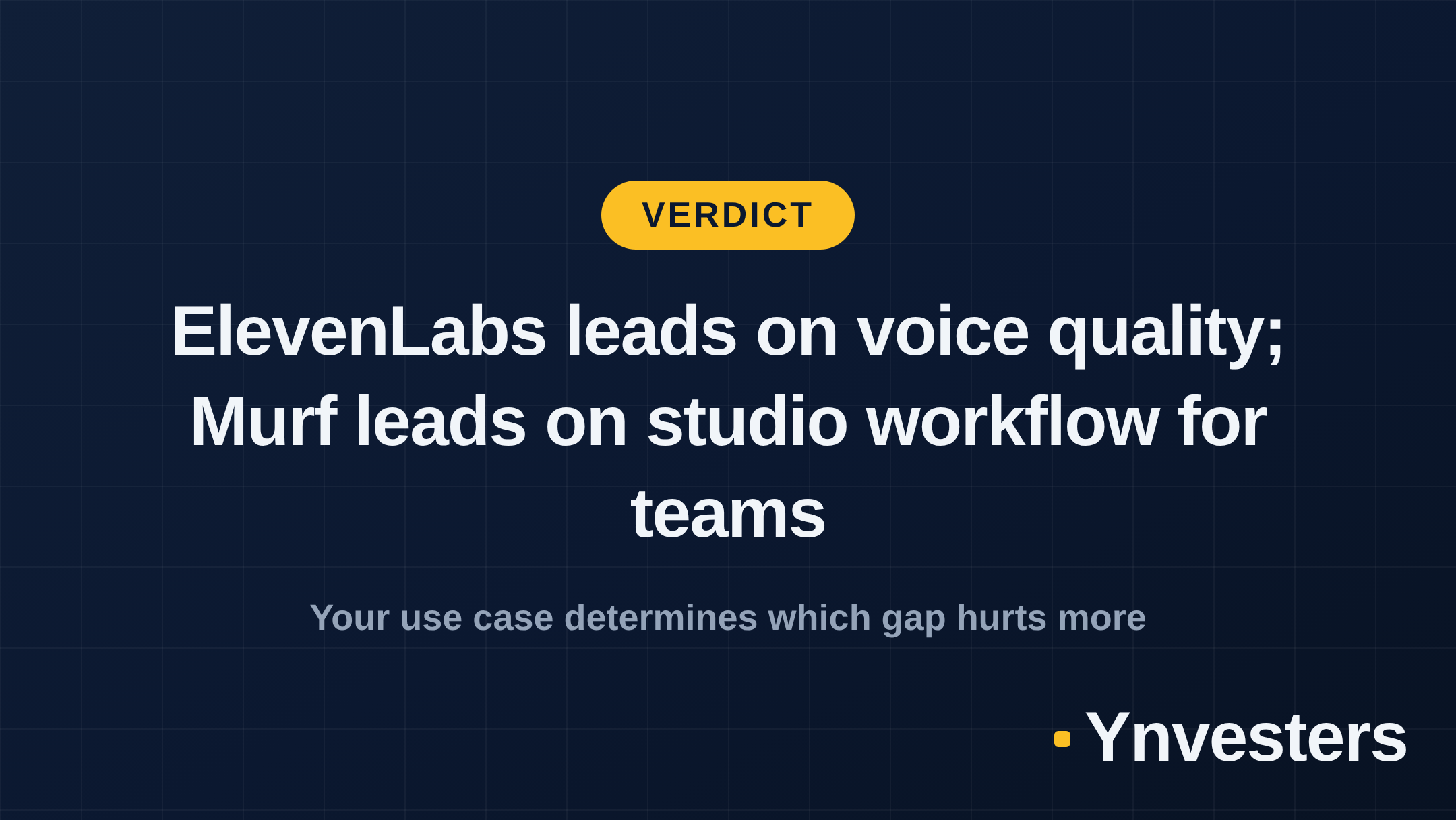
If you are a solo creator — a podcaster, an audiobook narrator, a YouTuber, a developer building a voice feature — pay for ElevenLabs. The voice quality ceiling is higher, the cloning tools are more capable, the API is more powerful, and the pricing scales down sensibly for individual use. Start with the free tier to validate the voice quality against your actual script, then upgrade when the character limit becomes a constraint.
If you are part of a team producing regular video content — training courses, corporate communications, product demos — take Murf AI seriously. The studio workflow genuinely reduces production time for non-technical teams. The voice quality is sufficient for professional narration. And the slide sync feature alone can save hours per project when your output is presentations.
What you should not do is pay for both at once to “keep your options open.” Pick the one that matches your dominant use case, get fluent in it, and reassess in six months. Voice AI pricing and capabilities are moving fast enough that the comparison will look different again by then — always check current pricing and feature lists directly on ElevenLabs and Murf AI before committing to an annual plan.
Frequently Asked Questions
Is ElevenLabs worth it for solo creators?
Yes, if realistic, expressive voice output is your priority. ElevenLabs consistently produces some of the most natural-sounding AI voices available, and its paid tiers unlock voice cloning and higher character limits that solo podcasters and content creators use daily.
Is Murf AI better than ElevenLabs?
Not overall, but in a specific scenario: Murf's built-in script editor, slide sync, and team workspace make it meaningfully better for corporate narration and e-learning production. For pure voice realism and API access, ElevenLabs leads.
How much does ElevenLabs cost?
ElevenLabs offers a free tier with limited monthly characters, plus paid plans that scale with usage. Exact pricing changes periodically, so check the official ElevenLabs pricing page for current figures.
How much does Murf AI cost?
Murf AI offers a free trial and several paid tiers aimed at individual creators and teams. Pricing is based on usage minutes and team seats. Check Murf's official pricing page for the most current rates.