Free AI Tools That Beat Their Paid Versions in 2026
A hard look at free AI tiers against their paid rivals. Here's which free plans genuinely outperform what you pay for — and where to stop spending money.
You’re paying for at least one AI subscription right now — maybe two — and somewhere in the back of your mind you’re wondering whether the free version would have been fine. That nagging suspicion is worth taking seriously, because in several important categories, the free tier genuinely is fine. In some cases, it’s better.
This is a frank look at where free AI tools now match or outpace their paid counterparts, what the actual tradeoffs are, and which subscriptions you can cancel today without losing meaningful capability.
The Landscape Has Shifted
A year ago, the gap between free and paid AI tiers was meaningful — you could feel it in output quality, context length, and model access. That gap has narrowed sharply. The major labs have raised the capability floor of their free tiers, partly to grow user bases and partly because smaller models have gotten much better.
The result: a lot of the $20–40/month “AI assistant” products you might be paying for are now running on the same underlying models available for free elsewhere. The value proposition has shifted from “better model” to “better interface” — and that’s a trade worth scrutinizing.
Tool-by-Tool Breakdown
1. Google Gemini Free vs. Paid AI Wrappers
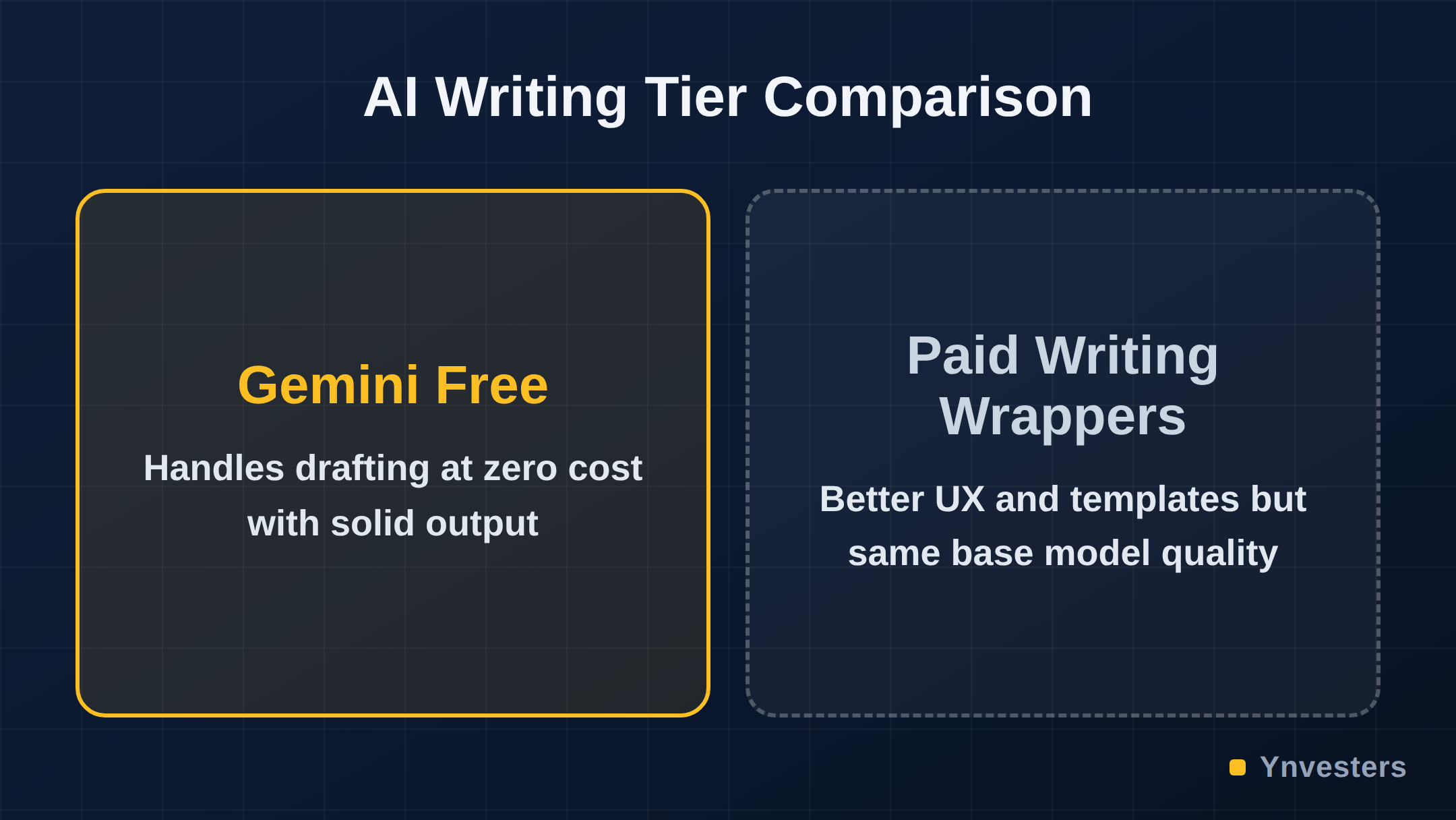
Google Gemini’s free tier gives you access to a capable Gemini model with no credit card required. It handles long-form drafting, summarization, and coding assistance competently.
The comparison that matters here isn’t Gemini Free vs. Gemini Advanced — it’s Gemini Free vs. the wave of third-party “AI writing assistants” charging $20–40/month. Many of those tools are built on the same model families, wrapped in a prettier interface with template libraries on top.
If your workflow is mostly open-ended drafting — blog posts, email, proposals — Gemini Free covers the core job. The paid wrappers add value primarily through structured templates and workflows, not better underlying output.
When the paid wrapper wins: If you work inside a specific platform (say, a content calendar tool with AI built in) and the workflow integration saves you real time, that’s a legitimate reason to pay. Raw generation quality is rarely the differentiator.
2. Claude Free vs. Claude Paid (and vs. Paid Competitors)
Anthropic’s Claude has one of the most generous free tiers in the space for document work. The free plan allows you to paste in long documents and get high-quality summaries, analysis, and Q&A responses. Claude’s handling of nuanced, long-context tasks — contracts, research papers, long briefs — is genuinely strong at the free tier.
The paid plan primarily buys you higher daily message limits and priority access. If you use Claude occasionally or in bursts rather than constantly throughout a workday, the free tier is functionally equivalent to paid for your actual usage pattern.
Where this gets interesting: some freelancers are paying $15–20/month for dedicated “AI document analysis” tools when Claude Free does the same job. Check your subscriptions against what Claude Free can do before renewing.
Honest limitation: You will hit message limits on heavy-use days with the free plan. If that’s a regular occurrence, the paid plan is worth it. If it happens once every few weeks, it isn’t.
3. Perplexity AI Free vs. Paid Research Tools
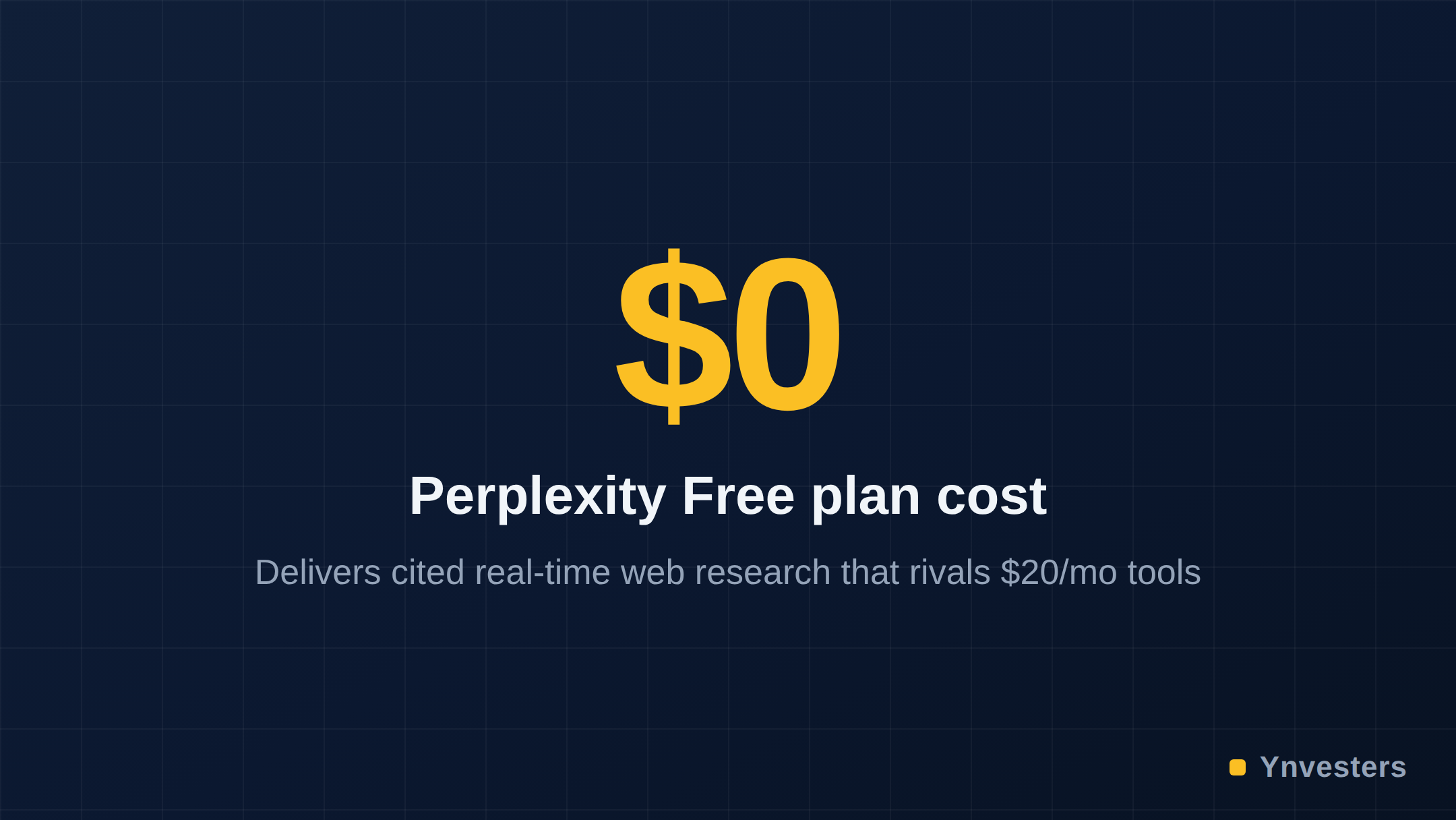
Perplexity AI is the clearest case of a free tool outperforming paid competitors in a specific use case: real-time, cited research answers.
The free plan gives you AI-generated answers with inline source citations drawn from live web results. This directly replaces — for many workflows — research tools and “AI search” products charging in the $15–25/month range. Those products often offer a better interface or more saved history, but the core research output from Perplexity Free is hard to beat on quality-per-dollar when the dollar is zero.
For freelancers doing background research, competitive analysis, or fact-checking, Perplexity Free should be the first tool you reach for before considering a paid research subscription.
What the paid Perplexity plan adds: Faster responses, access to more powerful model options, and higher usage limits. Verify current plan details at perplexity.ai/pro, as these change periodically.
4. ChatGPT Free vs. ChatGPT Plus
OpenAI’s free tier now includes access to GPT-4o with usage limits. This is a significant shift from prior years when the free plan was limited to older models.
For casual to moderate use — a few conversations per day, some drafting, some coding help — the free plan is genuinely sufficient. You get the same model; you just get less of it per day.
ChatGPT Plus (check openai.com/chatgpt/pricing for current pricing) makes sense if you rely on GPT-4o heavily throughout a full workday, need access to newer experimental models, or use advanced tools like code interpreter regularly for professional deliverables.
Our take: if you’re paying for Plus primarily out of habit from a year ago when the free tier was weaker, it’s worth reassessing. The gap has closed for moderate users.
Comparison Table: Free Tiers vs. Paid Alternatives
| Tool | Free Tier Strength | Paid Tier Advantage | Worth Paying For? |
|---|---|---|---|
| Gemini Free | Strong drafting, zero cost | More context, Workspace integration | Only if you need Google ecosystem depth |
| Claude Free | Long-doc analysis, nuanced reasoning | Higher daily limits, priority access | Yes, if you hit limits regularly |
| Perplexity Free | Cited real-time research | Faster models, higher volume | Only for heavy daily research use |
| ChatGPT Free | GPT-4o access with limits | Consistent access, experimental models | Yes, for all-day professional use |
What You’re Actually Paying For in Paid Tiers
Across all of these tools, the pattern is consistent. Paid tiers deliver:
- Higher rate limits — more messages, more generations per day
- API access — essential if you’re building workflows or automations
- Priority speed — matters during peak hours if turnaround time is critical
- Newer or larger model access — the gap here is smaller than it used to be
What paid tiers rarely deliver anymore: dramatically better output quality on standard tasks. The base models have improved enough that for writing, summarizing, researching, and coding assistance, free tiers produce work that professionals can use.
The honest question to ask yourself: am I paying for capability I actually use, or am I paying to avoid the occasional inconvenience of a rate limit?
Conclusion
Our verdict: For solo creators and freelancers spending $20–60/month on AI tools, a meaningful audit is overdue. Gemini Free handles general drafting without a paywall. Claude Free covers document analysis for most non-daily-power-user workflows. Perplexity Free replaces several paid research tools outright.
Who should still pay: If you use a single AI tool for six or more hours daily, hit rate limits regularly, or need API access for automation — pay for that one tool and cut the rest. The freelancer paying for three overlapping AI writing subscriptions is the profile most overdue for a cut.
What to do right now: List every AI subscription you’re paying for. Open the free tier of Gemini, Claude, and Perplexity. Run your three most common tasks through each one. If the output is good enough — and for most tasks, it will be — cancel the paid plan and bank the savings. The tools that survive that test are the ones actually worth paying for.
Frequently Asked Questions
Are free AI tools actually good enough for professional use in 2026?
For most solo creators and freelancers, yes. The base models powering free tiers from Google, Anthropic, and Perplexity have improved to the point where quality gaps are small; the main limitation is rate limits and context windows, not capability.
Which free AI tool is best for research and fact-checking?
Perplexity AI's free plan is our top pick for research — it cites sources inline and pulls live web results, which most paid writing tools don't do at any tier. Check current limits at perplexity.ai.
When does upgrading to a paid AI plan actually make sense?
Upgrade when you're hitting daily message limits multiple times per week, need API access, or require priority speed during peak hours. If none of those apply, the free tier is likely sufficient.
Does ChatGPT Free still compete with paid plans in 2026?
ChatGPT Free now includes access to GPT-4o with usage limits, making it competitive for occasional use. Heavy daily users will still hit rate caps, at which point the paid plan or a free alternative like Gemini may serve better.