Gemini 2.7 Flash: What It Is, Key Features, and Is It Worth It? (2026)
Google just announced Gemini 2.7 Flash, its most intelligent workhorse model yet. Here's what we know, what's missing, and who should care.
You’ve probably been here before: a new AI model drops, the announcement is full of superlatives, and by the time you’ve read three paragraphs you still don’t know whether to swap it into your workflow or ignore it until the hype settles. Google just did it again — this time with Gemini 3.7 Flash.
Announced on August 13, 2026, the model is being positioned as Google DeepMind’s “most intelligent workhorse model yet for coding and agents.” That’s a bold claim from a team that has been playing catch-up in the developer trust department. Here’s what we actually know, what’s still missing, and whether any of it should change what you’re paying for this month.
What Google Is Actually Claiming
The announcement, authored by Tulsee Doshi, Senior Director of Product Management at Google DeepMind, keeps the headline positioning tight: Gemini 3.7 Flash is built for coding and agentic tasks, and it’s the most capable Flash-tier model Google has shipped.
That framing matters. “Flash” in Google’s model naming has historically referred to a faster, cheaper tier relative to its “Pro” or “Ultra” siblings — optimized for throughput over raw reasoning depth. The 3.7 designation suggests this isn’t just a patch release; Google is pushing the intelligence ceiling of what a workhorse model can do.
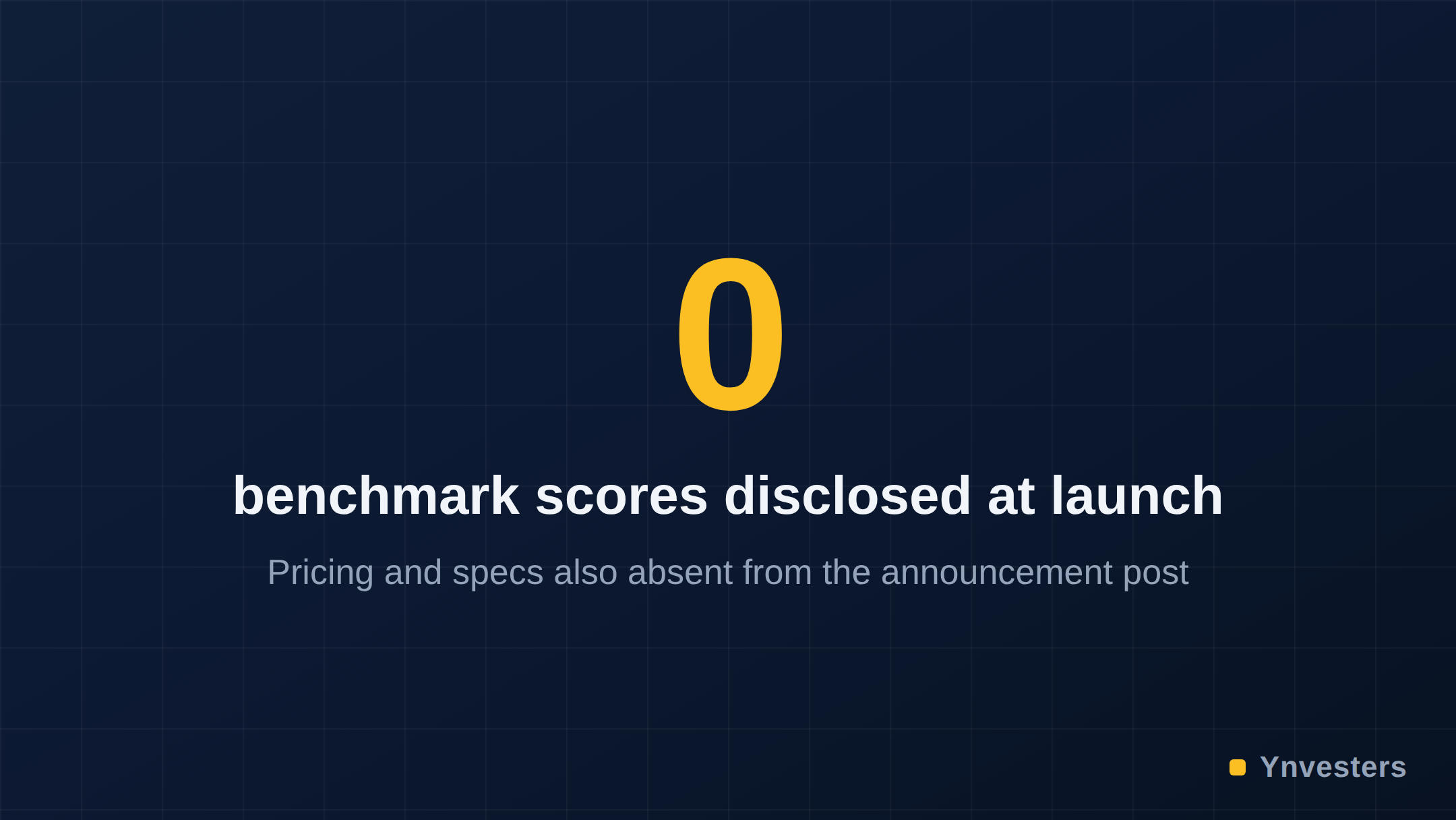
Beyond that, the source excerpt is sparse on specifics. There are no publicly disclosed benchmark numbers in the announcement, no context-window figures, and no multimodal capability breakdown listed in the text available at publication time. This is worth flagging plainly: if you need hard specs before evaluating a model, they aren’t in the launch post yet.
What we can say with confidence, based on the announcement language:
- The model is framed around coding as a primary use case
- Agentic workflows — multi-step, tool-using tasks — are explicitly called out
- It sits in the Flash tier, implying a speed-and-cost profile rather than a maximum-reasoning profile
Why “Workhorse” Is the Right Word to Watch
Google’s choice of “workhorse” is deliberate, and it signals something specific to developers and technical buyers.
Workhorse models aren’t the ones you use for a single showstopper demo. They’re the ones you call thousands of times a day inside a pipeline — the model that does the repetitive extraction, the code review loop, the agent sub-task. For that use case, cost-per-token and latency matter as much as raw capability. A model that’s 10% smarter but 3x slower or 2x more expensive is often the wrong choice for production agentic systems.
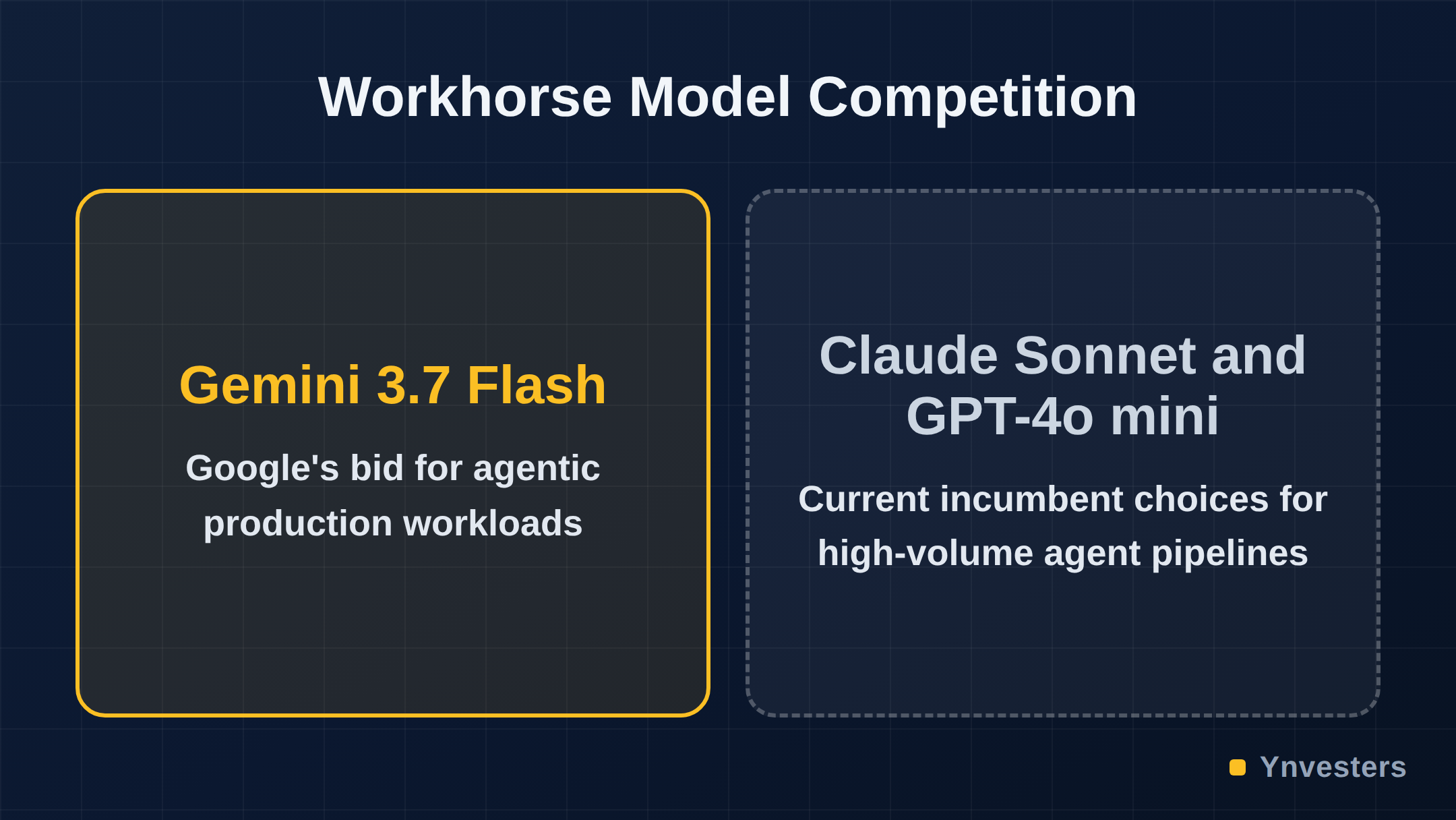
Google appears to be making a direct bid for that production-agentic slot — competing not just with OpenAI’s GPT-4o and o4-mini but also with Anthropic’s Claude Haiku and Sonnet tiers, which have become go-to choices for many teams running agents at scale. Whether 3.7 Flash actually beats those alternatives on the latency-cost-quality tradeoff is something that won’t be answerable until independent evals and API pricing are public.
The Context: Gemini’s Complicated Reputation
To understand why 3.7 Flash has to prove itself, you need to understand where Google’s Flash models have been standing in the community conversation.
Gemini has had a rough time earning developer trust compared to Anthropic and OpenAI, particularly in agentic and coding contexts. The Gemini model family has been technically impressive in some benchmarks — particularly around long-context tasks — but benchmark performance and day-to-day developer experience have often diverged for users.
Flash-tier models specifically have attracted criticism for being too eager to fall back on cheaper, shallower responses when tasks get complex. Google has been iterating rapidly, but each new release faces the accumulated skepticism of a developer community that has been burned by previous launches that underwhelmed in practice.
The 3.7 designation suggests a meaningful step forward on the intelligence side of that tradeoff. The question is whether it’s enough to change habits that have already formed around competing tools.
What Real Users Say
Community sentiment around earlier Gemini Flash models tells a story that Google’s announcement language deliberately doesn’t. In r/ClaudeAI, one user put the tool-calling problem bluntly: “Gemini is not nearly as good, they need to figure out tool calling. It kicks to flash too quickly and flash feels pretty dumb.” That comment earned 138 upvotes, suggesting it resonated broadly.
Code quality has been another recurring pain point. A separate r/ClaudeAI thread flagged a frustrating pattern: “Gemini is also very lazy and simply omits code on a regular basis. Even when you call it out, it still does it.” That kind of reliability issue is disqualifying for anyone running automated coding pipelines where incomplete output silently breaks downstream steps.
On the comparison front, one r/ChatGPTPro commenter was direct about the switching calculus: “From GPT-5 Plus to Gemini? No. Maybe Gemini 3.0 will change things, but as of 2.5 — just no. Look at livebench.ai for the reason.” The reference to livebench.ai — a community-trusted benchmark site that updates regularly — is a useful pointer for anyone who wants to track how 3.7 Flash scores once results appear.
It’s worth being clear that all of these comments refer to previous Gemini Flash versions, not 3.7. They represent the trust deficit the new model has to overcome, not a verdict on a product that wasn’t available when the comments were written. But for buyers deciding whether to experiment with 3.7 Flash on day one, this history is relevant context.
What’s Still Missing (And Why That Matters)
For a launch announcement, the information gap is notable. At publication time, the following details have not been disclosed:
| Detail | Status |
|---|---|
| API pricing (per million tokens) | Not announced |
| Context window size | Not announced |
| Multimodal capabilities (vision, audio, video) | Not specified in announcement |
| Availability (API, consumer apps, regions) | Not specified |
| Benchmark scores | Not disclosed in announcement |
| Comparison to Gemini 2.5 Flash | Not detailed |
This isn’t unusual for a launch-day post — Google often fills in technical details across developer documentation over the days following an announcement. But if you’re evaluating this model for a production system, don’t make budget or architecture decisions based on the announcement alone. Check the Google AI developer documentation and the official pricing page for current, authoritative figures.
Who Should Pay Attention Right Now
Despite the information gaps, Gemini 3.7 Flash is worth putting on your radar in specific situations:
You’re already building on Google Cloud or Vertex AI. If your infrastructure is already Google-native, evaluating a new first-party model is low-friction. The integration path is shorter, and any cost advantages compound with existing cloud spend.
You’re running high-volume agentic pipelines. If you’re calling a model thousands of times a day in an automated workflow, even a modest improvement in Flash-tier capability could meaningfully reduce the number of fallbacks to a slower, more expensive Pro-tier model. That’s the economic case Google is implicitly making.
You’re benchmarking alternatives for a new project. If you’re starting fresh and haven’t committed to a model provider, adding Gemini 3.7 Flash to your evaluation set costs little beyond API credits. Wait for independent benchmarks — livebench.ai is a reasonable starting point — before drawing conclusions.
Who Should Wait (Or Not Bother)
You’re happy with Claude Sonnet or GPT-4o for coding. There’s no evidence yet that 3.7 Flash closes the gap that community users have identified with earlier Flash models. Switching costs are real — prompt tuning, context management, tool-calling behavior all differ across models — and “most intelligent Flash yet” is a relative claim that needs third-party validation before it justifies those costs.
You need reliable, complete code generation at scale. The complaints about code omission in earlier Gemini Flash models aren’t minor UX friction; they’re pipeline-breaking reliability issues. Until 3.7 Flash has been stress-tested in public, assume the risk is unquantified.
You’re not a developer or technical builder. Google’s own framing is explicit: this model is built for coding and agents. If your use case is writing, research, or general productivity, this announcement is probably not about you — other Gemini tiers, or competing products, may serve you better.
The Bigger Picture: Google’s Agentic Ambitions
Gemini 3.7 Flash isn’t just a model update — it’s a signal about where Google is focusing. The explicit emphasis on agentic capability reflects an industry-wide shift toward AI that doesn’t just answer questions but takes sequences of actions to complete tasks.
OpenAI, Anthropic, and now Google are all racing to make their models reliable enough to be trusted as autonomous agents rather than interactive assistants. The technical bar for that is significantly higher: tool-calling reliability, instruction-following consistency, and graceful error handling all matter far more in agentic contexts than in a single-turn chat completion.
Google’s decision to push those capabilities into the Flash tier — rather than reserving them for Pro or Ultra — suggests they believe they’ve made enough progress to ship it as a production-grade workhorse, not an experimental feature. That’s an ambitious claim. The next few weeks of developer testing will tell us whether it holds.
Conclusion
Gemini 3.7 Flash is a genuinely interesting announcement that arrives with two significant caveats: almost no verifiable technical specs, and a Gemini Flash brand that carries meaningful trust baggage from earlier versions.
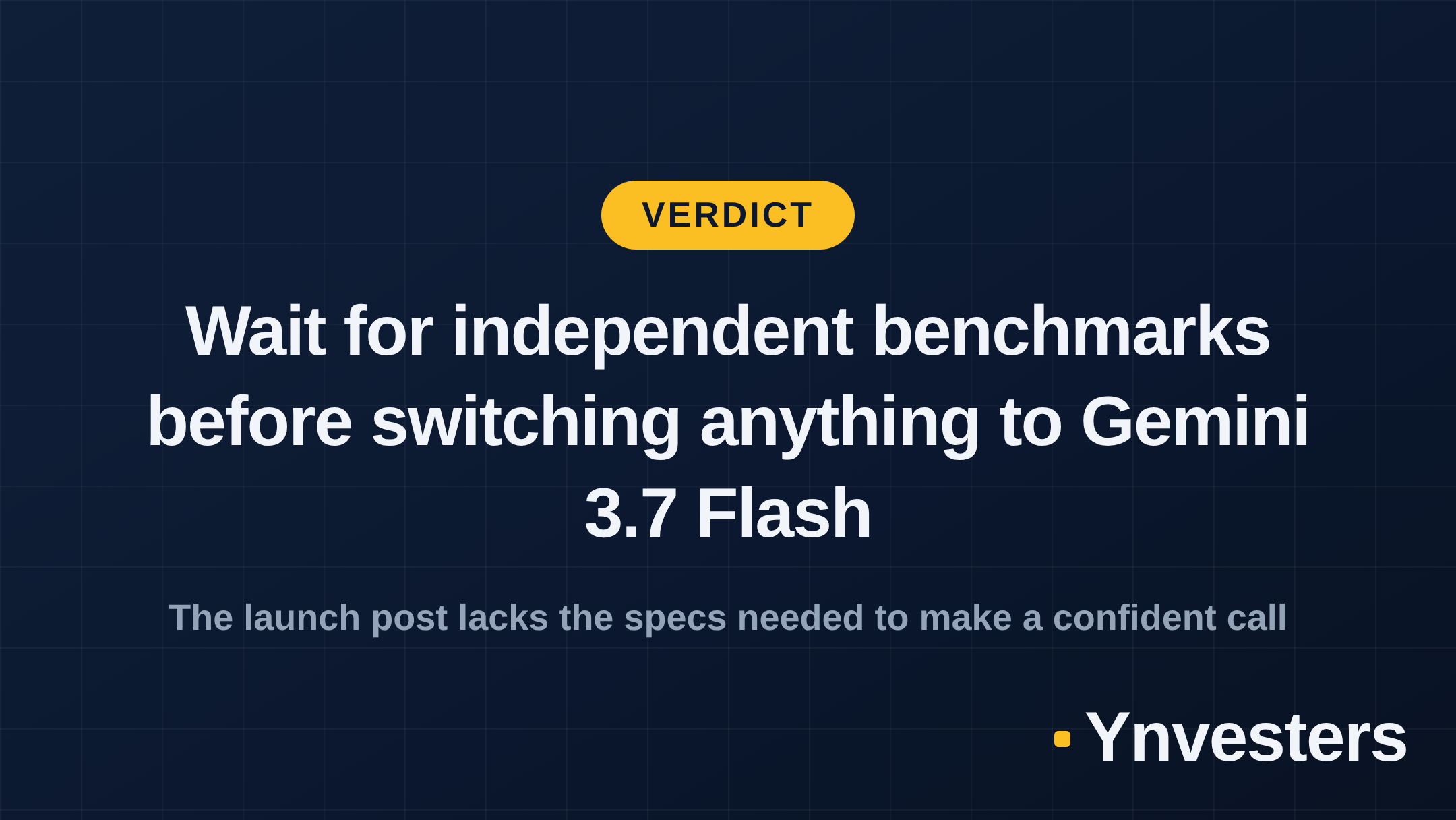
Our take: if you’re already on Google’s infrastructure and running agentic pipelines, add 3.7 Flash to your evaluation queue this week — the potential cost and latency benefits are worth testing. If you’re on Claude or GPT-4o and your workflows are running well, there’s no evidence yet that 3.7 Flash solves the specific reliability problems that drove developers away from earlier Flash models. Wait for livebench.ai results and independent developer reports before moving anything important.
Pricing hasn’t been announced. Specs haven’t been released. The announcement is a positioning statement, not a product sheet. Check the official Google DeepMind blog and Google’s developer documentation for updates — they’ll tell you more than this launch post does.
Frequently Asked Questions
What is Gemini 3.7 Flash?
Gemini 3.7 Flash is Google DeepMind's latest model, announced August 13 2026, and described as its most intelligent workhorse model yet for coding and agentic tasks. It succeeds earlier Flash-tier models in the Gemini family.
How much does Gemini 3.7 Flash cost?
Pricing has not been disclosed in the launch announcement. Check Google's official AI pricing page for current API rates and consumer tier availability.
Is Gemini 3.7 Flash better than GPT-5 or Claude for coding?
No independent benchmark data is available at launch. Community sentiment around earlier Gemini Flash models has been skeptical, particularly around tool-calling and code completeness — verify on livebench.ai or similar benchmarks once results are published.
Who is Gemini 3.7 Flash designed for?
According to Google DeepMind, it is built for coding and agentic workflows — making it most relevant to developers, AI engineers, and technical teams building automated pipelines.